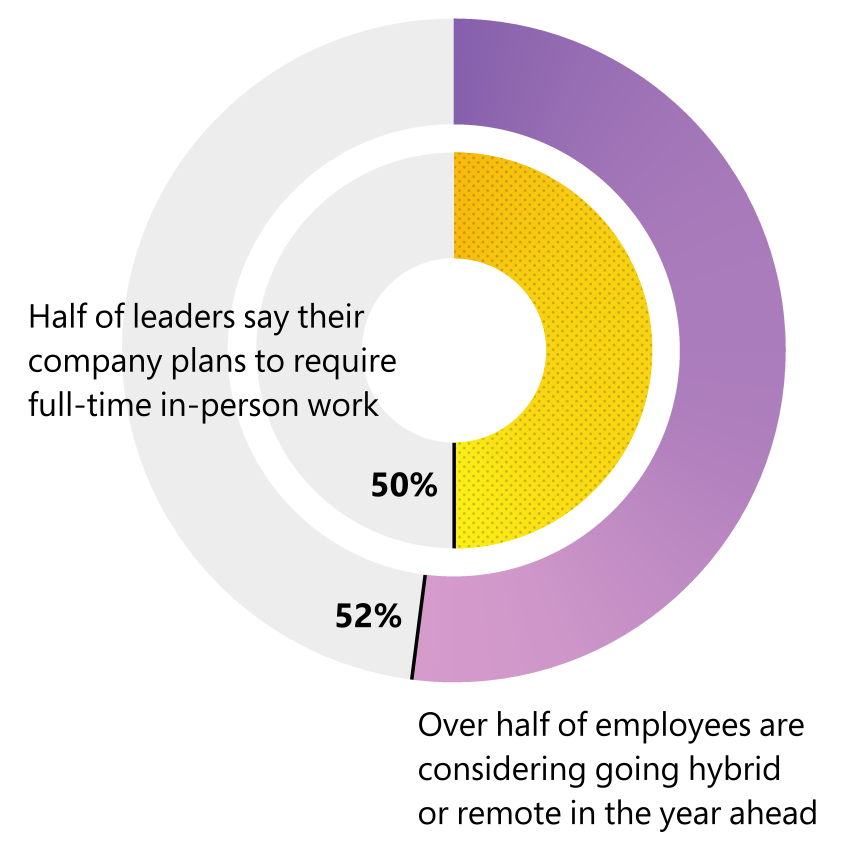
From when to go to the office to why work in the first place, employees have a new "worth it" equation. Findings from a recent Microsoft Work Trend Index Annual report suggest there's no going back. Read this blog post summarizing the report to explore top take-aways for business leaders tasked with the challenge of making hybrid work, work.
What are the key trends in hybrid work?
The 2022 Work Trend Index identifies five key trends: 1) Managers feel caught between leadership and employee expectations. 2) Leaders need to ensure the office is worth the commute. 3) Flexible work doesn't mean being 'always on.' 4) Rebuilding social capital in a hybrid environment is essential. 5) Employees are increasingly prioritizing health and wellbeing over work.
How has employee priorities changed since the pandemic?
Since the pandemic, employees have redefined their 'worth it' equation, with 52% of Gen Z and Millennials likely to consider changing jobs this year. Many are prioritizing personal wellbeing and family life over work, with 47% stating they are more likely to put family first. Additionally, 53% of employees are focusing more on health and wellbeing than before the pandemic.
What challenges do hybrid employees face?
One significant challenge for hybrid employees is understanding when and why to come into the office, with 38% citing this as their biggest hurdle. Additionally, many organizations have yet to establish clear team agreements for hybrid work, which can lead to confusion and inefficiencies in collaboration.
.png "Apposite")




 Sign in with LinkedIn